 Қазақша
 Русский
 English
GUEST LECTURE ON THE TOPIC: «A NEW STAGE OF THE TAX SYSTEM OF THE REPUBLIC OF KAZAKHSTAN: TECHNOLOGICAL INNOVATIONS AND DIGITAL SOLUTIONS»
Uploaded: 19.11.2025Views: 27221 time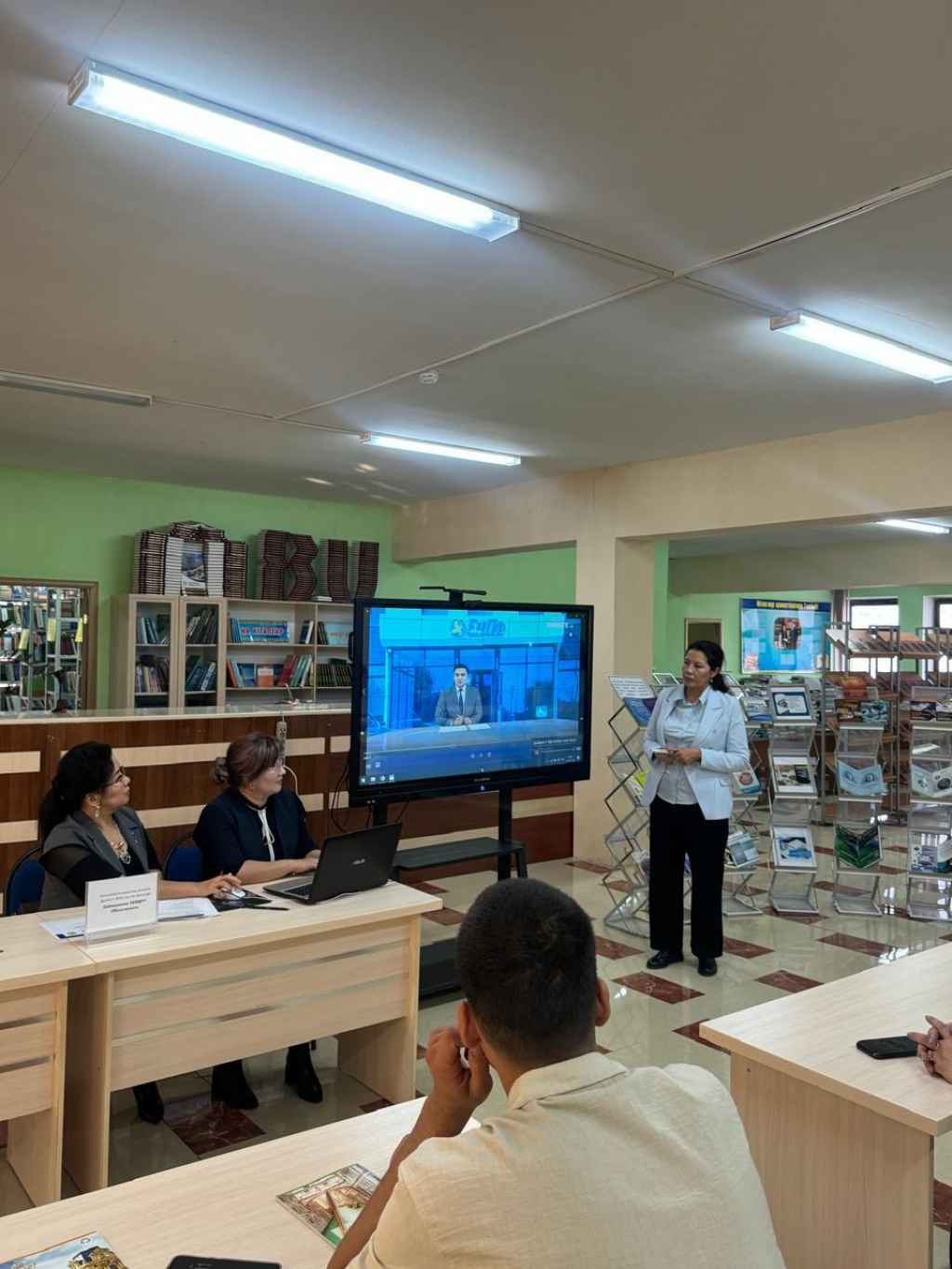
GUEST LECTURE ON THE TOPIC: «A NEW STAGE OF THE TAX SYSTEM OF THE REPUBLIC OF KAZAKHSTAN: TECHNOLOGICAL INNOVATIONS AND DIGITAL SOLUTIONS»
At Kyzylorda «Bolashak» University with the support of the Department of Economics, Audit, Business and Management, a guest lecture was held by Akmaral Abilasanovna Baimakhanova, Chief Accountant of the Balance+ Consulting Center LLP, on the topic: «Introduction of the New Tax Code of the Republic of Kazakhstan and its Impact on the Tax Accounting System: Opportunities of the Digital Economy and Artificial Intelligence».
The purpose of the lecture is to familiarize students with the basic principles of the new Tax Code of the Republic of Kazakhstan, to analyze the changes made to the tax accounting system, and to determine the role of digital economy technologies and artificial intelligence in improving tax administration. This lecture also helps students to learn how to assess current trends in the tax system, the possibilities of digitalization, and their effectiveness for business and auditing.
The lecture was attended by faculty members and students from the departments of «Economics, Audit, Business and Management», «Special Pedagogy and Psychology» and «Mathematics and Information Technology».
Akmaral Abilasanovna noted that the tax system of Kazakhstan has entered a new stage, explaining in detail the main innovations of the adopted Tax Code. She emphasized that the main goal of the new regulations is to simplify tax administration and create a favorable and predictable environment for business.
It was also noted that the introduction of the new code has significantly increased the role of digitalization in tax accounting. The lecture focus e don the impact of artificial intelligence on the tax sector. Artificial intelligence is not only of the future, but also of the present, which allows us to take tax processes to a new level and reduce the dependence on the human factor.
The lecture provided valuable guidance for students, helping them to gain a broad understanding of the role of new technologies in the tax system.
At the end of the lecture, students were asked to ask meaningful questions and active participants were awarded special certificates.